Translate

Thursday, 15 February 2024

Admiration From Afar 望洋興嘆

【天主經系列(四)】
望洋興嘆(路9:22-25)

耶穌這段說話(路9:22),是在伯多祿明認祂是「受傅者」(9:20)之後,顯聖容之前(9:28-36)所說的,即是耶穌的「第一次預言自己受難和復活」。門徒們完全沒有心理準備,因為這段話的內容,與他們內心對「默西亞」的期望,實在有很大的落差。他們既聽不懂,又不明白;難怪後來路加感慨地說,「這些話他們一點也不懂,這話為他們是隱祕的;祂所說的事,他們也不明白」(18:34)!作為一位師傅,門徒不明白自己的教導,是意料中事。為了讓他們明白,惟有想辦法採用其他更淺易的表述方式。可惜,天主的思維與人類的思維,的確有天淵之別(依55:8-9),倘若沒有聖神的助祐,恐怕門徒祇得望洋興嘆罷了!關鍵在於為甚麼「願意救自己的性命,必要喪失性命…喪失自己的性命,必能救得性命」(路9:24)呢?世間哪有這樣矛盾的道理呢?且讓我講述一個大家熟悉的故事,希望能夠對大家明白耶穌的教訓,有點幫助。

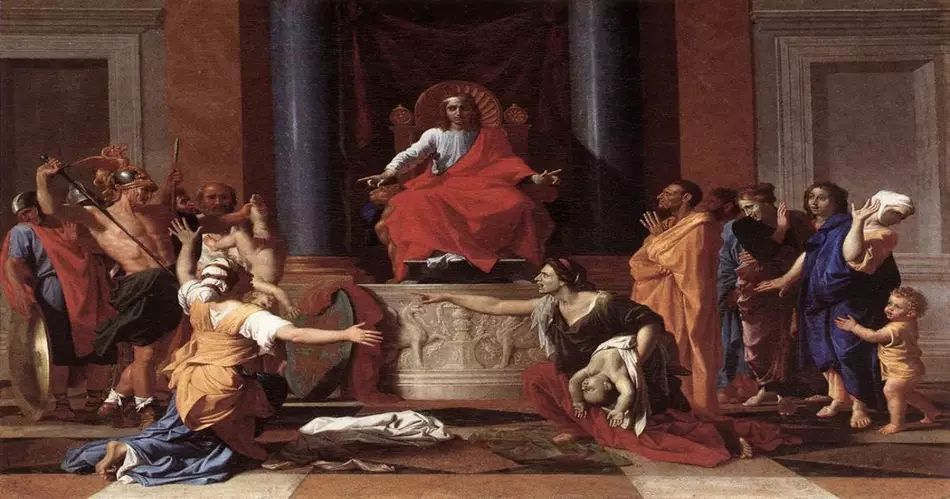
相信大家一定聽過『撒羅滿斷獄如神』的美談罷!話說兩個同住的妓女來到君王前,爭奪一個活的初生嬰孩,指死的一個是對方的。雙方爭持不下,一時間無法辨別誰是生母。「君王遂下令說:『把那活孩子劈成兩半,一半給這一個,一半給那一個』」(列上3:25)!親生母親愛子心切,為了保存孩子的生命,寧願放棄爭取;那邊厢,另一個妓女可能在想:「既然我沒有,妳休想擁有」,於是即使是死嬰也要爭取(3:26)!結果當然大快人心,全以色列人讚美撒羅滿斷案,具有天主的智慧!

不要小覷這「天主的智慧」(3:28b)是人之常情,是小聰明。當中的智慧在於一個「愛」字!保祿宗徒說得好:「我若把我所有的財產全施捨了,我若捨身投火被焚;但我若沒有愛,為我毫無益處」(格前13:3)。的確,沒有「愛天主、愛近人」的動機,施捨、殉道,不但對自己,對任何人都沒有益處!同樣道理,獻身跟隨耶穌基督卻始終培養不出愛主愛人的情懷,祇落得身敗名裂,帶給教會陋聞,真是可悲!
天父啊!求祢寬恕我們的罪過,如同我們寬恕別人一樣。亞孟!

生命恩泉
圖片鳴謝:Christianity.com


Admiration From Afar (Luke 9:22-25)
[The Lord’s Prayer Series IV]

Jesus said this (Luke 9:22) after Peter’s Confession (9:20) and before His Transfiguration (9:28-36). That was the First Prediction of the Passion. The disciples were totally unprepared for the shock because the message deviated too far from their anticipations of the Messiah. They were unable to catch the meaning and failed to understand. No wonder Luke later put this remark in the gospel, “But they understood nothing of this; the word remained hidden from them and they failed to comprehend what He said” (18:34). As a mentor, Jesus did not expect His disciples to understand His teachings completely. To help them comprehend, He has to come up with more easily understood articulations. Unfortunately, there is a huge gulf between God’s thoughts and men’s thoughts (Isaiah 55:8-9). Without the help of the Holy Spirit, I am afraid the disciples could only admire from a great distance! The key difficulty lies in why “whoever wishes to save his life will lose it, but whoever loses his life … will save it” (Luke 9:24)? How is it possible for such a paradox to exist at all? Let me tell you a familiar story which hopefully will shed light on our understanding of this paradox.

I trust all of you have heard of Solomon’s wise judgments! Two prostitutes lived in the same house and both gave birth to a son. One of the sons died while the mothers slept. Now, they fought for the living son, argued before Solomon that the dead child belonged to the other woman. It was difficult to know who the real mother was. So the king ordered, “Cut the living child in two, and give half to one woman and half to the other” (1 Kings 3:25)! The real mother loved the baby and gave up fighting in order to save its life while the other woman probably thought, “If I have not, you too will have not”. She agreed to cut the baby into halves (3:26)! Consequently, everybody was happy except for the stonehearted prostitute! “… all Israel …were in awe of him [Solomon], because they saw that the king had in him the wisdom of God for giving right judgment” (3:28)!

Do not dismiss this “wisdom of God” (3:28b) as common sense. God’s wisdom is “Love”. Paul says well, “If I give away everything I own, and if I hand my body over so that I may boast but do not have love, I gain nothing” (1 Corinthians 13:3). Indeed, without the motivation to “love God and love neighbour”, almsgiving and martyrdom do nobody any good! In the same vein, for those who have responded God’s call generously to follow Jesus Christ and yet fail to develop a desire to love God and to love neighbour, it is a great pity to see them end up bringing scandals to the Church!
Heavenly Father! Forgive us our trespasses as we forgive those who trespass against us. Amen!

Wednesday, 14 February 2024

Observe Abstinence in Both the Belly And the Heart 齋心也應齋口

【天主經系列(三)】
齋心也應齋口(瑪6:1-6, 16-18)

在默想今天福音的訊息之前,且讓我們澄清一個歧義。今天的福音說:「你們應當心,不要在人前行你們的仁義,為叫他們看;若是這樣,你們在天父之前,就沒有賞報了」(瑪6:1)。但耶穌教導「地鹽世光」的道理時,卻教訓門徒要讓人看見他們的善行(5:16)。為甚麼前者(5:16)應該讓人看見,後者(6:1)卻不要讓人看見呢?我祇需要指出後者,即「行你們的仁義」,希臘文原文是「施捨」。相信各位讀者一定能判斷其中的分別,不用我在這裡「嘮嘮叨叨」了(6:7)!

今天是「聖灰星期三」,適逢農曆新春初五,香港教區免守大小齋。主教公署的公佈呼籲信友「仍有本份自行採用其他適當的方式踐行克己或愛德善工」,即使不用齋口,仍應齋心,因為「守齋」是基督徒靈修的基本功。其實天主教的守齋傳統與其他宗教的齋戒相比,的確有點相形見絀。因為天主教的守齋規矩,祗是「最低要求」而已,大家可以按自己的實際狀況,自行調節甚至「加碼」!「守齋」讓我們與貧窮的人為伍,學習他們信靠上主的經驗,所以是基督徒靈修的基本功。

試想想,我們要劃出一段日子來守齋,表示我們有剩餘的食物及資源,否則談不上要守齋!與此同時,耶穌基督最小的兄弟不是每天都在捱餓嗎?他們用不著另定守齋的日子!為甚麼我們有剩餘呢?「養兒防老,積穀防饑」嘛!唉!人啊!你們把「信德」掉到哪?你們沒有唸過「我是上主,我是你的天主,是我由埃及國將你領出,你張開口,我要使它滿足」(詠81:11)與及「我要以麥子的精華養育選民,以石中的蜂蜜飽享他們」(81:17)嗎?我們不是上主天主從罪惡的奴役中領出來的選民嗎?相信了天主,領洗加入了天主教之後,為甚麼還要防這樣、防那樣,心緒不寧呢?
天父啊!求祢今天賞給我們日用的食糧。亞孟。

生命恩泉
圖片鳴謝:facebook.com/encwomensretreat


Observe Abstinence in Both the Belly And the Heart (Matthew 6:1-6, 16-18)
[The Lord’s Prayer Series III]

Before meditating on the gospel message today, we need to clarify an ambiguity. The gospel today reads, “But take care not to perform righteous deeds in order that people may see them; otherwise, you will have no recompense from your heavenly Father” (Matthew 6:1). However, when Jesus teaches about the light of the world and the salt of the earth, He tells His disciples to let people see their good deeds (5:16). Why should we allow people to see the former (5:16) but not the latter (6:1)? I only need to point out that in the latter case, the Greek original means “almsgiving”. You don’t need me babbling more (6:7) for I trust you readers are able to tell the difference!

Today is Ash Wednesday and it happens to be the fifth day in the Lunar New Year. Traditional fasting and abstinence are dispensed. The Chancery Office exhorts, “During Lent all the faithful are obliged to pray more and to perform more acts of penance and charity … caring for the material or spiritual needs of the poor and the socially marginalized.” In other words, even though we are exempted from observing fasting and abstinence of the belly, we need to fast and abstain our hearts because fasting and abstinence are basic spiritual exercises for Christians. Indeed, the fasting traditions of other global religions dwarf the Catholic practices which are minimum requirements only. We should adjust or augment them according to our stations of life. With fasting we walk hand in hand with the poor and learn from their experience of entrusting themselves to the mercy of the Lord. This makes fasting the basic exercise of spirituality.

Think about it, that we need to draw up a fasting and abstinence period means that we have redundant food and resources. Otherwise how can we talk about fasting! At the same time, are not the least of Jesus’ brethren starving everyday? There is no need for them to draw up another period of fasting! Now why do we have surplus? Of course “To save up for famine”! Alas! Men! Why have you dropped your faith? Have you not read, “I am the Lord your God, who brought you up from the land of Egypt. Open wide your mouth that I may fill it” (Psalms 81:11) and “But Israel I will feed with the finest wheat, I will satisfy them with honey from the rock” (81:17). Are we not God’s People whom God have liberated from the bondage of sins? You believe in God, and after being admitted into the Catholic Church, why are your hearts so restless and your souls still insecure?
Heavenly Father! Give us today our daily bread. Amen.

Tuesday, 13 February 2024

It Is Most Difficult To Convert People’s Hearts 改變人心最難

【天主經系列(二)】
改變人心最難(谷8:14-21)

看來「原罪」在人類心靈留下的創傷,相當嚴重。且看,不但學識淵博的法利塞人和經師,未能在自己的專業領域中,找到有關天主救贖人類的啟示;他們甚至濫用法律,誅滅耶穌而後快;連耶穌基督自己親自訓練和一起生活的宗徒們,不但心靈遲鈍,甚至後來因貪財而出賣師傅;為了保命而否認那位立他為「掌門人」(瑪16:18)的恩師!培根的名句:「知識就是力量」應用到法利塞人身上,並不一定正確;看來連漁夫稅吏們「將勤補拙」的努力也枉然。沒有天主採取主動,人類的確沒有本領自救!

在今次事件中,明明在船上還有一個餅(谷8:14),為甚麼「他們彼此議論:他們沒有餅了」(8:16)呢?為甚麼他們能正確回答耶穌的提問,即「收滿了幾筐碎塊」(8:19-20),到頭來仍然「一頭霧水」(8:21)呢?看來門徒關心的不是「沒有餅了」,而是「沒有足夠數目的餅」給耶穌再顯神蹟!

在首次增餅中,耶穌憑他們收集到的五餅二魚,增餅給五千人吃飽。可能門徒認為「七」是一個神聖的數目字,是給耶穌施行神蹟的必要條件!所以第二次,他們預留了七個餅給耶穌施行增餅神蹟,讓四千人吃飽。他們的焦點放在如何為「美滿成果」創造他們認為是「有利的條件」,卻忽略了天主的參與和介入,纔是美滿成果的關鍵所在;而且結果是喜出望外,綽綽有餘的!門徒們的教育水平可能低,情有可原;但學識淵博的法利塞人和經師,就難辭其咎了。在舊約經典記載的戰事中,經常是天主幫助以色列人取得勝利,而且是以少勝多,「免得以色列對我自誇說:是自己的能力救了自己」(民7:2b)。穩操勝券輕易,改變人心最難!天父非常明白這一點,所以要派遣獨生子降生成人,御駕親征!
天父啊!願祢的旨意,奉行在人間,如同在天上。亞孟。

生命恩泉
圖片鳴謝:mylakeview.weebly.com


It Is Most Difficult To Convert People’s Hearts (Mark 8:14-21)
[The Lord’s Prayer Series II]

Original Sin has left serious wounds in the souls and minds of humanity. Look at the learned Pharisees and scribes. Not only were they unable to unveil God’s salvation but they even tried to abuse the Law to kill Jesus. The apostles with whom Jesus stayed and personally trained were no better. Their hearts were hard and their minds dumb. One of them betrayed the Master for money while another denied Him who made him the Rock of the Church (Matthew 16:18). Bacon’s aphorism “Knowledge is power” seems not to work on the Pharisees. The hard works of the disciples were futile. Had God not taken the initiative, humanity would not have been able to save themselves!

In today’s story, the disciples “had only one loaf with them in the boat” (Mark 8:14). Why did “They conclude[d] among themselves that … they had no bread” (8:16)? Why were they able to answer Jesus’ prompt correctly, namely “how many wicker baskets full of fragments you picked up” (8:19-20) and “Still not understand” (8:21)? It seemed that “having no bread” was not their real concern. Rather, “not having sufficient bread” for Jesus to work miracles was!

During the first multiplication of bread, Jesus fed 5000 with five loaves and two fish. Probably the disciples thought that “seven” was a sacred number, a necessary condition for Jesus to work miracles! Therefore, during the second multiplication miracle, they reserved seven loaves for Jesus to multiply to feed 4000. They focused on creating what they thought to be advantageous conditions to output good results, forgetting that God’s participation and intervention are the keys of successes, and even surprises of abundance! We may forgive the disciples because they were not scholars but not the Pharisees and scribed who knew the most. There are many war narratives in the Hebrew Scriptures. God always helped the Israelites win and with a small number of fighters, “Lest Israel vaunt itself against me and say, ‘My own power saved me.’” (Judges 7:2b). Winning a battle is easy; converting men’s hearts is the most difficult! The Father knows it best thus, He sent His only begotten Son to incarnate to fight the war Himself!
Heavenly Father! Your will be done on earth as it is in heaven. Amen.

Monday, 12 February 2024

Testing God 試探天主

【天主經系列(一)】
試探天主(谷8:11-13)

按【馬爾谷福音】的時序,法利塞人與耶穌的衝突,在第三章已經到了「與黑落德黨人作陷害耶穌的商討,為除滅祂」的地步(谷3:6)。那時候的耶穌,是一個有本領治病驅魔的「拉比/師傅」,挑戰法利塞人和經師在猶太人心目中的地位。到了第八章,耶穌不但治病驅魔,而且曾在公開場合,即除了門徒以外的其他人面前,平息過風浪(4:35-41),兩次增餅(6:30-44, 8:1-10),這就是今天所讀福音的背景。在法利塞人心目中,耶穌已經不是一個能治病驅魔那麼簡單的「師傅」了,而是一個比洗者若翰更偉大的人物。他是【梅瑟五書】所預言,像梅瑟一樣的那位先知(申18:18)嗎?莫非他就是默西亞嗎?

要驗證並不難!倘若耶穌真是天主派來像梅瑟一樣的先知,他自然像梅瑟一樣,能行來自天上的神蹟,例如分開紅海(出14:19-22)、天降瑪納(16:13-15)、擊石出水(17:5-6);況且,梅瑟的繼承人若蘇厄,不是曾經命令太陽和月亮停頓在空中一整天(蘇10:12-13)嗎?因此,法利塞人認為,向耶穌要求一個來自天上的徵兆,考驗他,是合情合理和合法的(谷8:11)!

耶穌基督發自心中的嘆息(8:12),是可以理解的。祂珍惜和欣賞法利塞人是「以色列人的師傅」(若3:10),甚至是首領,但他們竟然不能從舊約經典的啟示中,認出耶穌基督就是天主子、默西亞,試問平民百姓,還可以憑甚麼獲得天主的救贖呢?法利塞人祇著眼法律的文字和前人的傳授,忽視了法律的精神,甚至引用法律條文,控訴耶穌不守安息日;日後更設下圈套陷害耶穌…如今法利塞人要求耶穌行神蹟,無疑觸犯了「你們不可試探上主你們的天主,如同在瑪撒試探了祂一樣」(申6:16)的法律。作為「以色列人的師傅」,竟然好像被撒殫附身一樣,試探天主子(瑪4:5-7),豈不令人悲嘆!
天父啊!不要讓我們陷於誘惑。亞孟。

生命恩泉
圖片鳴謝:michaelckw.blogspot.com


Testing God (Mark 8:11-13)
[The Lord’s Prayer Series I]

According to the chronology of Mark, the conflict between the Pharisees and Jesus had escalated to the stage of conspiring to put Jesus to death, “The Pharisees went out and immediately took counsel with the Herodians against him to put him to death” (Mark 3:6). At that time, Jesus was a rabbi that healed and exorcised, challenging the status of the Pharisees and scribes among the Jews. Reaching chapter 8, not only did Jesus heal and exorcise, but He had also calmed a storm at sea (4:35-41), multiplied bread twice (6:30-44; 8:1-10) in public. This is the context of the reading today. In the eyes of the Pharisees, Jesus was not simply a rabbi who healed and exorcised but somebody greater than John the Baptist. Would He be “the prophet like Moses” foretold in the Pentateuch (Deuteronomy 18:18)? Would He be the Messiah?

It is not difficult to verify! If Jesus were the prophet like Moses sent from God, like Moses, He should be able to show them a sign from heaven, such as parting the Red Sea (Exodus 14:19-22); raining down manna (16:13-15) and striking a rock to give water (17:5-6) etc. Look, had Joshua, the successor of Moses, not ordered the sun and the moon to halt halfway across the heavens for an entire day (Joshua 10:12-13)? Therefore the Pharisees thought it reasonable and legitimate to demand a sign from heaven to test Jesus (Mark 8:11)!

It is understandable for Jesus Christ to sigh from the depth of His spirit (8:12). He cherished the Pharisees as “teacher[s] of Israel” (John 3:10), and even leaders. But they were unable to recognize from the revelation in the Hebrew Scriptures that Jesus Christ is the Son of God and the Messiah, with what would Jewish commoners be able to obtain the redemption of God? The Pharisees set their sight on the letters of the Law and the traditions of ancestors and ignored the spirit of the Law. They even made use of the Law to accuse Jesus of failing to observe the Sabbath. Subsequently, they even lay traps to ensnare Jesus … Now that they demanded Jesus to perform miracles, they had breached the law of “You shall not put the Lord, your God, to the test, as you did at Massah” (Deuteronomy 6:16). How pitiful it is to see these “teachers of Israel” test the Son of God (Matthew 4:5-7) as if Satan had possessed them!
Heavenly Father! Lead us not into temptation. Amen.

Sunday, 11 February 2024

Attainment Of Peace 獲得平安

Sunday in Lunar New Year
Theme: Attainment Of Peace 獲得平安

Sure enough, our experiences and learnings determine our present actions. However, on top of experiences, anticipations also affect our present decisions. Whether your actions are reactive or proactive, the past together with the future cause the present! Since the future is not a certainty, the future creates worries in us. A peace of mind is a rare commodity for many people. Blessed are those who are able to attain a peace of mind.

During Lunar New Year, the Cantonese usually wish each other “Kung Hei Fat Choy恭喜發財” which literally means, “Wish you make big money”. Of course, we know that money cannot buy everything. However, for most people, possession of wealth increases their sense of security and reduces their worries. Another popular blessing is “Sun Tei Kin Hong身體健康” which means, “Wish you a healthy body”. Surely, with a healthy body, we can achieve more and spend less money in medicines. Again, a good health increases a person’s security. Of course, there are other blessings such as “Sun Nin Chun Pou新年進步” which means, “Make progress in new year” and “Man Sze Sing Yi萬事勝意” which means, “Everything surpasses your expectations” etc. All these blessings and well wishes show how proactive people are. However, the first two common Lunar New Year wishes reveal as well how insecure the Cantonese are!

As Cantonese Catholics, we share similar insecurities of our folks. The question is, does the value system of Christianity help alleviate those insecurities? In the second reading today, St. Paul says, “Have no anxiety at all but in everything, by prayer and petition, with thanksgiving, make your requests known to God” (Philippians 4:6). Christians believe in a God who is almighty and has created this known universe. Logically speaking, they should have no anxiety at all. Alas! Had the Philippian Christians had no anxiety, St. Paul would not have written such an exhortation! Thus, believing in an almighty God does not remove anxieties. Christians worry for many good reasons. For example, Christians in some countries are a religious minority and they receive exploitations and persecutions. Christian morality goes against the flow to produce many social conflicts and when Christians are the majority in a city and the local Church becomes too powerful, she falls prey to scandals etc. To add fuel to fire, our God allows the good and the innocent to suffer for no apparent purpose just as we meditated last week! A peace of mind is in short supply!

However, the Christian God is more than an omnipotent God. He allows sufferings for a good reason. Moreover, He sent His only-begotten Son to incarnate, to live among us and to die for us. For our good, His only-begotten Son even does not run away from suffering in order to accompany us and to liberate us. That is the confidence St. Paul has to support his exhortation. He continues, “Then the peace of God that surpasses all understanding will guard your hearts and minds in Christ Jesus” (4:7). Indeed, an omnipotent Creator God is not sufficient to remove all our anxieties. With the Son of God always accompanying us on our earthly pilgrimage, we enjoy a security “not as the world gives” (John 14:27). To echo John’s ode of “From His fullness we have all received, grace in place of grace” (1:16), St. Paul continues to advise the Philippians, “Finally, brothers, whatever is true, whatever is honourable, whatever is just, whatever is pure, whatever is lovely, whatever is gracious, if there is any excellence and if there is anything worthy of praise, think about these things” (Philippians 4:8). Alas! What are all these things if not the fruits of the Holy Spirit! In short, Christian sense of security comes from the Blessed Trinity.

Jesus Christ has laid down the Christian value system more than two thousand years ago in the Beatitudes before all modern ideologies. Why do subsequent governments that come to power not follow, making the teachings of Christ so “revolutionary”? I think it is because many leaders seek immortality but have taken whatever shortcuts available to them. The Beatitudes are path to immortality because God created men in His own image (Genesis 1:26) and God is immortal. Men would have been immortal had Adam obeyed God’s instruction (2:16-17). Human beings can only live for at most 120 years (6:3). However, immortality is still within reach. The seed of immortal still lies dormant within our souls as well as our bodies (Romans 8:23) and Jesus Christ teaches us how to unlock and nurture this immortality in the Beatitudes: poverty, mournfulness, meekness, hunger and thirst for God’s salvation, mercy, purity of heart, peace making and martyrdom (Matthew 5:3-10). In the modern world where life is convenient and comfortable, who wants to be poor, to mourn, to be bossed around, to give up fighting, to forgive, not to have contingency plans, not to stab backs and lastly to die martyrdom? People adopt an entirely opposite approach in life because they need security and the Beatitudes offer them none! In order to attain immortality within the available time-span, they take shortcuts: accumulate wealth and power ruthlessly without any remorse, keep fighting to gain upper hands, deny rivals a second chance, have Plan B and Plan C etc. in their sleeves, to stir up conflicts in order to gain advantages and lastly to silence all dissidents etc. Good Christians, do you see what kind of war you are fighting? How do we fight back? A tit for tat or to give offenders a second chance? Imposing concerted punishments or to hunger and thirst for God’s righteousness?

The recent “Messi Mess” in Hong Kong gives us ample food for thought during this Lunar New Year. It is ample because this incident involves more than the three parties concerned: namely, Inter Miami, Tatler Asia, the HKSAR government and higher powers behind.
Beloved brethren! It is time to take out your value system and polish it. On which side are you, God’s or the world’s?
God bless!


Picture credit: times.com, singtao.com

Tuesday, 6 February 2024

When We Feel Sick and Weak …

When We Feel Sick and Weak …

Deacon Alex Kwok

In our younger days, life was hectic and vibrant because most of the things were under our control. We ate and drank whatever we fancied and were proud to be able to burn the midnight oil for several consecutive days without degrading our performances. We did not have to be careful with our life styles nor with people whom we made friends. However, we can enjoy those days no more. Today, we can easily catch flu, not to mention Covid-19. We topple or drop objects more often. Our knees begin to ache and shake uncontrollably. We start to suffer hangovers after only a few drinks and perhaps indigestions after consuming some fatty dishes. It takes longer for us to load our memories and start forgetting what to do with objects we are holding in our hands, or searching for the pair of spectacles we are grasping. Our sights are dimming; our living space is getting quieter and our teeth are falling off one by one. We begin to find ourselves lying in bed, watching the ceiling all the waking hours, losing count of evenings and mornings. We recognize the faces and voices of our loved ones no more. So many strangers come and go to spoon-feed us and change our diapers that we no longer know what embarrassment means. One day, spoon-feeding switches to tube feeding and people in coloured uniform have to force the air through our nostrils into our lungs lest we die of suffocation … Agony turns into relief when suddenly you find yourself floating in mid-air, watching medicals professionally trying to resuscitate your corpse. Freed from constrains of your mortal body, all your memories, fond as well as painful ones, return vividly in a split second. It is time to say goodbye and to descend into a hot bath to purge us of our regrets …

Being terminally ill is no uncharted-waters. Thanks to advancements in medical technologies, we know what it is and see it more often than in previous generations. Nowadays, the medical professionals are more capable of prolonging the life of the terminally ill even though the outcome is inevitable. In one sense, family members are lengthening the agony of their loved ones. On the other hand, they have more time to accompany the sick and to reconcile their relationships so that when the time of departure comes, everybody may bid each other farewell in peace. In fact, no living person has experienced death before. Therefore, the terminally ill are pathfinders. They leave impressions on their family members and all the people around them, including the medicals and carers, how to approach death in dignity or in helplessness. They may place themselves each day in the merciful hand of God and meet their day of departure without regret for what they leave behind and look forward to joining their loved ones on the day of resurrection. Or they may struggle in vain to ward off the horrors of death; may keep moaning or even cursing out of excruciating pains about the treatments they receive from carers, medicals, family members, visitors and even the clergy. Oh, may God have mercy on those souls!

Though paradoxical, it is indeed a blessing to be weak and sick. Most of our life, we are confident in ourselves and trust little in God. When we are sick as well as feeble and find nobody to rely on, only then shall we turn to our heavenly Father like the Prodigal Son. He will be more than happy to embrace us.

Beloved brethren! It is extremely painful for anybody, even for Jesus Christ, to suffer and die alone. If it be possible, spend time, even as short as half-an-hour, to visit and stay at the bed of the terminally ill, listening to their stories. On top of the medical treatment they receive, give them spiritual supports. Pray the Rosary with them or for them if you are unable to stay close. By the time they see our heavenly Father face to face, we will have one more guardian angel interceding for us.

Holy Mary, Mother of God. Pray for us sinners. Now and at the hour of our death. Amen.
God bless!


Picture Credit: 1800hospice.com

Sunday, 4 February 2024

Father! Deliver Us From Evil 父啊!救我們免於凶惡

Fifth Ordinary Sunday, Year B
Theme: Father! Deliver Us From Evil 父啊!救我們免於凶惡

Today in the first reading, we hear of Job’s lamentaion. He spoke for all the good and the innocent who suffered for no apparent purposes. Had the story of Job had not a happy ending, his story would have been a total tragedy offering no hope in the Bible. Still it is a challenge for all Christians to defend the omnipotence of God together with His righteousness and mercy. Since ancient times, people have been criticizing the idea of an almighty and righteous Christian God who loves and cares for humanity. If this God were loving and caring, He would not have allowed the good and innocent to suffer. If this God were loving but were not able to deliver the good and innocent from sufferings, He would not be omnipotent! If He were all powerful but still allowed the good and innocent to suffer, not to mention the wicked had always been prosperous and healthy, this Christian God would not be fair and righteous! In short, Job’s story forces us to meditate on the mystery of sufferings, especially the sufferings of the good and innocent.

Some Christians put together passages from the Bible to prove that after all the good and innocent are not good and innocent as they appear to be. St. Paul says, “All have sinned and are deprived of the glory of God” (Romans 3:23). Therefore, goodness and innocence of people are actually superficial. They can only fool the eyes of human beings but not God’s. Moreover, God says, “You shall not bow down before them or serve them. For I, the Lord, your God, am a jealous God, bringing punishment for their parents’ wickness on the children of those who hate me, down to the third and fourth generation” (Deuteronomy 5:9). Who in his right mind would “hate” God? In the context of this piece of proof-text, the word “hate” means “love less” because the Hebrew language does not have comparative syntax. The text is a warning against idolatry. God will punish down to the third and fourth generation those people who love idols more than Him. Alas! Humanity loves making different sorts of idols such as power, wealth, knowledge and even health, to secure their livelihood! Therefore, sufferings are God’s punishments for your sins or sins of your ancestors etc. This argument is extremely weak and is refuted by Jesus when He cured the man born blind. Jesus says, “Neither he nor his parents sinned; it is so that the works of God might be made visible through him” (John 9:3). Jesus is Christ and His words do not apply to this blind man only but are applicable universally. In fact, prophets in the Old Testament also refute the view that children should suffer for the sins of their parents (Ezekiel 18:20-21). Though it is not easy to pin down exactly what Jesus means by “the works of God might be made visible through him [the born blind]”, the argument that sufferings are God’s punishments has been proven wrong by the Son of God!
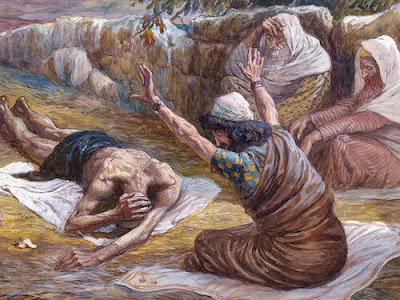
Some Christians put forth the argument that sufferings are good for us. If our lives had always been a bed of roses, our potentials would have been buried/stored away (Matthew 25:18; Luke 19:20) and would not have had the opportunity to emerge and grow. For example, take a look at the athletes who undergo hellish trainings. Of course they suffer more than any other ordinary people. But it is a price to pay in order to attain good results and to defeat rivals. This argument gives sufferings a purpose and the victims a hope. Bear the pains and tomorrow will be a better day! Obviously this argument is insufficient. Take a look at people who suffer illnesses or poverty until their last breath. Just as what Job laments, “My days are swifter than a weaver’s shuttle; they come to an end without hope” (Job 7:6). When the better tomorrow keeps receding from you and the situation shows no signs of improvement, how unbearably heavy and hopeless a suffering life is!

Some Christians console themselves to argue that sufferings make us “wounded-healers” so that in the future, we may be more capable of helping those who undergo similar sufferings because we have gone through the pains and survived. Just as what St. Paul says in the second reading today, “To the weak I became weak, to win over the weak. I have become all things to all, to save at least some” (1 Corinthians 9:22). Indeed the Son of God did not save humanity in an aloft manner from heavens above, but took flesh to become man; lived among us to undergo human sufferings. “For we do not have a high priest who is unable to sympathize with our weaknesses, but one who has similarly been tested in every way, yet without sin” (Hebrews 4:15). This argument is reasonable as long as the wounded-healers do not fall into the trap of thinking themselves Saviours. Healing comes from God, not from us. Even genuine faith-healers/exorcists are merely channels of God’s grace. However, this argument still fails when the wounded-healer dies and does not have the opportunity to heal others!

Lastly, some Christians suggest that we should not be myopic but should look from God’s long-term perspective. God has a grand plan. Be patient and let God’s plan unfold. Then we’ll understand. This argument brings to mind the famous aphorism of Tertullian “The blood of the martyrs is the seed of the Church” (Apologeticus, L.13). In the spirit of the Parable of the Sower, sufferings of the good and the innocent are truly seeds of gospel messages which will touch the hearts of some people and the torch of God’s gospel will pass on! Though efficiency might not be high, as long as more of us generously respond to God’s call to become labourers, we are optimistic that the harvest will be abundant (Matthew 9:37b-38; Luke 10:2). Alas! We have been meditating God’s grand plan for two millenia but who has successfully scratched the surface of God’s grand plan? This seed metaphor has missed one crucial point. What makes the blood the seed? The Passion and Resurrection of Jesus Christ does! The Son of God is the True Pascal Lamb who takes away the sins of the world by bearing the brunt of all human evils. He retains the wounds after Resurrection to remind His followers that evils really hurt. St. Paul says, “Now I rejoice in my sufferings for your sake, and in my flesh I am filling up what is lacking in the afflictions of Christ on behalf of his body, which is the Church” (Colossians 1:24). St. Paul does not promise his readers a better tomorrow. Instead, he gives sufferings a new purpose, namely to take part in Christ’s effort to build the Kingdom of Heaven on earth!

What impresses me most in the gospel story today are the exorcisms. Though the exorcisms were mentioned in general terms (Mark 1:32, 34), together with the one mentioned in details on last Sunday, there are altogether three mentions in the first chapter of Mark. In New Testament times, Jews attributed sickness to either God’s punishment or demonic possession. Demonic possession was permitted by God as a punishment as well. Therefore, the sick bore all the blames and could not expect sympathy from fellow Jews. Following this logic, lepers and the possessed were typical sinners! Nowadays, thanks to Jesus’ exhortation on the Last Judgment, “Ill and you cared for me” (Matthew 25:36b), modern people treat the sick more humanely. Of course, there is still room for improvement because not all the sick are treated equally. Some are more equal than the others. Today, there are still many things we are ignorant about some illnesses, in particular mental illnesses. Ignorance breeds fears and prejudices. Therefore, mental patients do not receive the dignity due them. Even worse, totalitarian states lock up dissidents not only in correctional institutions but also mental institutions! I am concerned because the good and the innocent will easily fall prey to such injustice and sufferings.

Alas beloved brethren! Life is really a complex phenomenon. The case of totalitarianism points to the fact that it is unfair to put all the blame on God. Humanity has a share of blame to bear. Take a look at the global climate crisis today. The faults of some people make the rest victims. It follows that we should take up the responsibility to clean up the mess we create. In short, not only does Jesus heal, but we Christians are also sent out to heal the world as channels of the Father’s grace.
Heavenly Father! Deliver us from evil. Amen.


2021 Reflection
Picture Credit: valleyofsprings.com