The Epiphany of the Lord, Year C
Theme: Magi were Pilgrims of Hope
Matthew tries to prove to his Jewish believers that Jesus is their long awaited Messiah. He makes use of the genealogy of Jesus to show that Jesus is a descendant of David, one of the requirements Jews developed to resolve the apparent contradiction between Nathan’s Oracle to King David (2 Samuel 7:13) and the subsequent Babylonian Captivity. With a descendant of David to be the Messiah, God honours His pledge to establish David’s royal throne forever. Matthew traces the genealogy in three groups, the number of Hebrew alphabets in David’s name, of 14 generations, where 14 is the sum of the three Hebrew alphabets in David’s name. Of course, Matthew selects some kings and skips others in order to make up the number 14. His intension is more important than his details! Then Matthew tries to arrange the Nativity narratives to show that Jesus’ birth fulfils five Old Testament prophecies! Who else on earth could meet such a demanding criterion if not Jesus? However, Matthew misses one prophecy which modern people are more interested in, namely the Star of Bethlehem, “I see him, though not now; I observe him, though not near: A star shall advance from Jacob, and a scepter shall rise from Israel …” (Numbers 24:17). With results from astronomical simulations, modern people are able to deduce the most likely birthday of Jesus, namely April 17, 6 BC. Yes, the calendar we are using is actually not correct. According to Roman history, Herod the Great died in 4 BC! This hypothetical Christmas date makes the shepherds narratives in Luke reasonable (Luke 2:8). Moreover, “April” makes some people even speculate that Jesus was crucified on April 17, 24 AD! How exciting and entertaining! Actually, the Star Prophecy was part of the Oracle of Balaam whom the Moabite King Balak hired to curse the Israelites. It does not mention Bethlehem and simply foretells the rise of a king, probably David, Solomon or Josiah, any king.
Alas! It is legitimate for people to read different messages in the same story. While scientific-minded Christians are free to draw a connection between the Nativity and Passion of Jesus Christ, clergy are eager to draw lessons from the gifts of the Magi to highlight the three-fold ministry of Jesus as king, priest and prophet. Indeed, the kingship of Jesus alone has attracted the attention of many brilliant minds. Biblical scholars would draw the parallel between King Solomon and Jesus who once says, “At the judgment the queen of the south will arise with this generation and condemn it, because she came from the ends of the earth to hear the wisdom of Solomon; and there is something greater than Solomon here” (Matthew 12:42, 1 Kings 10:1-13)! In the Nativity narratives, the Magi from the east shows greater understanding of the role of Jesus, namely his divinity than the Queen of Sheba. Literary-minded readers would see a political drama unfold, namely powerful people pitching their wits against each other, to demonstrate the universal kingship of Jesus Christ. More pastoral-minded ministers would encourage the congregation to lead an exemplary Christian life like a Star of Faith, guiding non-believers to acknowledge the kingship of Jesus and receive His redemption. The Nativity narratives are forever pregnant with symbolisms for meditation.
At the beginning of this Jubilee Year, I would like to meditate how the Magi set examples for us as Pilgrims of Hope. Let us establish the probable identity of the Magi. They must be knowledgeable people in order to understand astrological phenomena in heavens and their significance to human affairs on earth. We cannot dismiss their astrological knowledge outright as superstitious because of our limited understanding of their civilizations. The fact that they took up a perilous trek with many uncertainties is sufficient to prove the huge significance they attached to the rising of the Star of Bethlehem! For us Pilgrims of Hope on earth, this journey on earth is also full of uncertainties because of our incomplete understanding of God and of this world. Yet, they shall not discourage us from travelling towards our goal, which must be of supreme significance to us. Beloved Pilgrims, what are your goals? What are you looking for? What keeps you moving ahead in life on earth?
As for the Magi, they sought “the newborn king of the Jews” (Matthew 2:2a). However, Judaea was only a negligible Roman vassal state at the time. Why would the Magi bother to take the trouble to travel afar to search for the king of an insignificant political entity? In view of the huge resources they mobilized in this journey, I opine that “the newborn king of the Jews” is insufficient to express the full intention of the Magi. We can only speculate two probable but related reasons. First, their astrological knowledge was not accurate enough to narrow the location down to Bethlehem. They have no choice but to visit firstly the capital of this insignificant vassal state, namely Jerusalem, to gather more information. Second, being diplomatic, who else would the Magi seek an audience if not the king at that time, namely Herod the Great? Alas! The Magi, not of their faults but the political situation at that time, brought fear instead of joy to Jerusalem (2:3)! Had Herod the Great been a benevolent king, the visit from the Magi would have brought great joy to Judaea because their long awaited Messiah was born! In reality, Herod the Great was an extremely cruel and bloodthirsty ruler. His history shows that he had no qualm nipping any threats to his throne at the bud. The people in Jerusalem were in fear because Herod the Great would kill their newborns. They were much relieved when the chief priests and scribes announced the birthplace of the newborn king to be Bethlehem instead of Jerusalem (2:5)! We can see the cruelty of Herod the Great from how “He ordered the massacre of the boys in Bethlehem and its vicinity two years old and under, in accordance with the time he had ascertained from the Magi” (2:16b). For us Pilgrims of Hope, we cannot expect our journey to be anything but perilous. Do not expect to bring joy and peace to the people we meet. Do not blame ourselves when our message brings the people we encounter inconveniences, troubles and even disasters instead of hope. Do not be discouraged and troubled when dangers, fears and frustrations arise. Like the Magi, look up to heavens and stick to a goal that is worth pursuing!
Beloved brethren! We should know that when the Son of God came the first time, His own people did not welcome him too. Our faith informs us that the God we believe in is a God of love and mercy. He wants us to partake in His eternal life. We need to be patient in suffering troubles and even persecutions. In the words of St. Paul, “Hope does not disappoint, because the love of God has been poured into our hearts through the Holy Spirit that has been given to us” (Romans 5:5). He advises us to confront troubles with a proper attitude, “Rejoice in hope, endure in affliction, persevere in prayer” (12:12). In conclusion, St. Paul blesses us in these words, “May the God of hope fill you with all joy and peace in believing, so that you may abound in hope by the power of the Holy Spirit” (15:13). So, let us be joyful and peaceful Pilgrims of Hope. Amen.
God bless!
2022 Reflection
Picture Credit: creator.nightcafe.studio
Solemnity of Christ the Universal King, Year B
Theme: Who Wants To Be Such A King? 有誰願意為王呢?
With a Chinese background, my understanding of kingship would not be identical with the biblical one, if there be such a “biblical kingship” concept. Like most civilizations, the Chinese society has also gone through the evolutionary stage of feudalism. There were kingdoms occupying regions of land/resources as well as subjects under the governance of a mandarin hierarchy headed by a king. Such a structure is necessary in order to handle building projects proportional to the occupied land mass and military campaigns for defence or expansion. Of course, the efficiency and effectiveness of such a structure depends on its designs as well as how the civil servants managed corruptions and power abuses. The Chinese concept of kingship is rather loose. For example, the most powerful players in whatever fields, be it chess and herbal medicine etc., even a horse that has won most races, are entitled kings. With more diversified fields such as poetry, where a “king” title is insufficient to honour all the top players, people would call them “saint”, “fairy” or even “buddha”. In short, when there are players in a field, the most outstanding player would be entitled “king”.
When Yahweh decides not to give up humanity that He created in His own image, He has in mind a long lasting salvation project. Firstly, He befriended some human beings, such as Noah and Abraham, to prepare a path for His only begotten Son to incarnate. He multiplied the descendants of Abraham in Egypt and liberated his 600,000 offspring with earth shaking miracles. Moses was His appointed frontman to execute this project that is a component of a much bigger venture. Then the Israelites, the Chosen People had settled in the Promised Land of Canaan. In the early stage, the 12 tribes were loosely united. In the tradition of Moses, “Judges” arose to unite them to fight against oppressors neighbour. Samuel was the last Judge to unite and settle disputes among the 12 tribes. However, time had changed. The Israelites wanted to follow the examples of other nations. They demanded a king to lead them. Samuel prayed to the Lord who says, “Listen to whatever the people say. You are not the one they are rejecting. They are rejecting me as their king” (1 Samuel 8:7). Samuel explained to the people the privileges of a king and warned them that they would regret and by then the Lord would not answer them (8:11-18)! Perhaps the privileges were too attractive, namely to lord over all his subjects, to take away from his subjects whatever fancies him for his own pleasure. In short, all subjects would become his slaves. The people refused to listen to Samuel’s advice and persisted. At last, Samuel anointed Saul, “a handsome young man. There was no other Israelite more handsome than Saul; he stood head and shoulders above the people” (9:2) to be the first king of Israel. Scrutinizing the history of the Israel kingdom, we find that all Israelite kings were flawed. Saul was disobedient. David was after God’s heart (13:14) but committed adultery and murder. God gave Solomon wisdom (1 Kings 3:12) and he built the first Temple which he populated with idols brought along by his pagan wives and concubines. King Josiah renewed the Covenant with the Lord and started religious reformation (2 Kings 23:1-14) which lasted only 13 years because of his premature death in a military compaign against Egypt (23:29) … Sadly, honourable kingship would only exist in the minds of Plato and Confucius!
Human kingship is doomed from the beginning because human beings do not live longer than 120 years. “The LORD said: My spirit shall not remain in human beings forever, because they are only flesh. Their days shall comprise one hundred and twenty years” (Genesis 6:3). Since no human king would live forever, finding a legitimate successor constantly occupies the minds of kings. Naturally, kings want to retain sovereignty in order to protect their extended families as well as the wealth and privileges they have accumulated. Besides successors, kingmakers are also another major headache for kings. Kingmakers also have their interests to protect. If they were able to put a man on the throne, they would have no qualm in toppling the present occupant who threatened to remove them in order to install a new one in their favour on the throne. If a government is totalitarian, succession is usually bloody and overthrowing emperors usually involves revolutions/rebellions or civil wars. Democratic governments are better only in this respect. Succession through voting is not bloody. Yet, it does not guarantee true liberty, justice and fraternity because the actual rulers of the country are those wealthy corporations behind the powerbrokers. Alas! The hearts and minds of kings/presidents are divided. Where could we find kings who would dedicate their whole beings for the benefits of the subjects under their rules? I am afraid we couldn’t find any in this world.
The Great Depression followed the First World War. The world was becoming the stage of the two most powerful players: The USA, which represents capitalism, and the USSR, which represents socialism. Alas! Both ideologies trample upon the autonomy and dignity of humanity, the image of God. Both of them are elitist in which a minority access, control and consume more than 90% of the resources of this planet, no worse than the privileges described in the First Book of Samuel above. The majority of humanity are like the beggar Lazarus, “who would gladly have eaten his fill of the scraps that fell from the rich man’s table” (Luke 16:21a). Two major power blocs emerged to enslave the majority of humanity. It is a form of modern day slavery, which love and justice are in short supply and God forbids! The Church has the obligation to tell the world what sort of kings she needs. In 1925, Pope Pius XI instituted the Solemnity of Christ the Universal King to remind us that while governments come and go, Christ reigns as King forever. However, what kind of kingship Christ is teaching the world?
In the gospel reading today, we may take a glimpse of Christ’s kingship. Interrogated by Pilate whether He was the King of the Jews (John 18:33) and after a few exchanges, Jesus answered, “My kingdom does not belong to this world … But as it is, my kingdom is not here” (18:36). That is to say, Christ declines to enslave humanity. Translated in modern jargon, Christ respects our autonomy and our right to private property. Of course, the Son of God has no need of slaves. As for state mandarins and CEO’s of multi-national corporations, are you willing to pocket less and share the fruits of production with the labourers? If you are secular and reject religious spirituality as irrelevant, at least a Chinese aphorism might be more palatable to you. Here is ancient wisdom, namely 「藏富於民to stockpile wealth among the commoners」. While you fatten yourselves, forget not to keep your lambs fat! For the sake of sustainable development for future generations, refrain from 「竭澤而漁fishing by draining the swamps」. Christ is the Universal King whose crown is a crown of thorns and whose throne is the cross.
Beloved brethren! Who wants to be such a king, except the Son of Man prophesized in the books of Daniel and Revelation? “He [the Son of Man] received dominion, splendor, and kingship; all nations, peoples and tongues will serve him. His dominion is an everlasting dominion that shall not pass away, his kingship, one that shall not be destroyed” (Daniel 7:14). “Jesus Christ, the faithful witness, the firstborn of the dead and ruler of the kings of the earth. To him who loves us and has freed us from our sins by his blood, who has made us into a kingdom, priests for his God and Father, to him be glory and power forever and ever. Amen” (Revelation 1:5-6). This is the kingdom that Jesus refers, a kingdom of priests for the Father, when He replied Pilate (John 18:36). Christ is the supreme High Priest who offers Himself to the Father for the world. Christ the Universal King has made us into a kingdom of priests to offer to the Father for the world. Beloved brethren! Are you ready to join Christ the Universal King?
God bless!
Thirty-Second Ordinary Sunday, Year B
Theme: The Lord Will Multiply A Million Fold 主會百萬倍增加恩寵
There were different types of widows in the Old Testament. Thus, we must understand their stories together with their backgrounds. Unlike many other societies in which superstitious people thought that somehow, widows caused the death of their husbands and thus widows were accursed and the general public had better avoided them, the fates of Jewish widows depended very much on their fertility or whether they had children. It was because with a male child, the relatives of the deceased husband had to take care of the child and thus the widow mother. There was also a custom of Levirate marriage in which the brother of a deceased man was obligated to marry his brother’s widow to give birth to a son for the deceased brother in order to continue the lineage of the deceased man. If the widow were not too old to bear children, this would be her second safety net! All these rules were charitable and equivalent to modern day social security measures to take care of the poor and the disadvantaged. In Genesis 38, we find the famous story of the widow Tamar whose father-in-law failed to do her justice through Levirate marriage.
We usually have a wrong impression that widows must be poor like the widow of Zarephath who was collecting a few sticks to prepare the last cake for herself and her son and then waited for starvation (1 Kings 17:12). Not necessarily so! Indeed, in today’s gospel reading, we hear of Jesus’ criticism of the evils of scribes, “They devour the houses of widows …” (Mark 12:40a) In fact, widows could be widows whose deceased husbands were rich! In the Old Testament, there was a beautiful and rich widow called Judith who was able to charm an enemy general Holofernes with her beauty and beheaded him (Judith 13:8), a femme fatale indeed! From the nativity story of Jesus in the gospel of Luke, we know of a widow prophetess Anna who spent more than 63 years in the Temple “worshipped night and day with fasting and prayer” (Luke 2:37b). Somehow, the Temple took care of some widows at least in the early years of Jesus. Time had really changed. Instead of the Temple taking care of widows, like what she had done during the early years of Jesus, some thirty years later, the poor widow was obliged to offer her two brass coins in the Temple treasury! The story of this poor widow has immortalized the concept of poor widows throughout the ages when the Church carries the baton of the Temple to take care of widows. Paul wrote about widows in his epistles to the churches (1 Corinthians 7:8, 1 Timothy 5:5). The Acts recorded the incident of establishing deacons to take care of the distributions of provisions to the poor and the widows within the early Church (Acts 6:1). The stories of poor widows are worth telling because they manifest the mercy of God (Psalms 146:9). Before God, who is not a poor widow?
Twelve years ago, I was elected a deacon candidate. I could not remember the gospel reading of the rite of election because during the whole celebration, the story of the poor widow who offered two brass coins filled my head. I was very much elated because despite all my shortcomings, the Lord accepted my poverty. “For they [the rich] have all contributed from their surplus wealth, but she, from her poverty, has contributed all she had, her whole livelihood” (Mark 12:44). The Lord does not measure our performance by quantity: namely the amount of money or the length of service etc., but by the quality of our heart: namely our sincerity and loving-care. My 7-day pre-ordination retreat further confirmed this. I wept for seven days for the deeply repressed shortcomings in my soul in contrast to Jesus’ mercy. Wounds were uncovered but there was not sufficient time to nurse and to heal. In the end, the image of Jesus’ Stigmata told me that I had to live with my shortcomings, to carry them forever without healing in order to become a wounded-healer! I learnt that it is the heart that counts, not the quantity. As for the quantity, I have no doubt that the Lord would multiply the widow’s brass coins as He did with the five loaves and two fish. He is more than capable to provide for our needs. Moreover, He would also transform the hearts of the donors like He did with the water in the Cana banquet. If the merciful Lord was able to transform water into wine, would it be impossible for Him to transform the vanity of the wealthy people into genuine piety and charity? Meditate deeper, hadn’t Jesus transformed one of the Boanerges (3:17) into an apostle who always wrote on the topic of love? Had not Jesus transformed the Christians-hunter Saul into the apostle Paul, the Christianity founder? Jesus’ multiplicative and transformative powers inspire great hope in all of us. Meanwhile, we should not despise the insignificant services of the others, and only see the importance of our own contributions because the Lord may multiply the graces of the insignificant services of insignificant people a million-fold!
Some people have a more realistic temperance. They question how the poor widow would survive her days ahead! The kind-hearted and realistic readers worry that when she had no more money, she would be starved to death in the days to come. There was no mention of her child. She might be too old to get married again or if she had a child, it would only be a daughter not counted by the deceased husband’s relatives. Then her burden would be greater! I posed the same question to my legionaries and they told me that the worry was unnecessary. Unlike modern people who lock themselves up in their own flats and rooms without knowing their neighbour, it was not so in ancient times when the community was more closely knitted. People in a village knew each other well. In contrast, it is not uncommon today for people to call the police to break into flats when they smell of the stench of rotting corpse of home alone neighbour next door! In short, the widow’s neighbour would take care of her daily needs and in return, she might do some house chores for her neighbour. That might also account for the source of her two brass coins! Not long afterwards, when the early Church came into existence on the Pentecost, this poor widow might be among the first 3000 converts and started the trend of widow membership, making the Church a more conspicuous sign of God’s mercy on earth! Thus, the Church is on her right path nowadays in upholding the “preferential option for the poor”. “Love for widows and orphans, prisoners, and the sick and needy of every kind is as essential as the ministry of sacraments and preaching of the Gospel” (Pope Benedict XVI, “Deus Caritas Est”, §22, 2005).
Beloved brethren! Representing God on earth, the People of God should take care of widows and orphans until the social services departments of a state are able to take over the mission. Then the Church shall move on to feed the hunger of other disadvantaged. We don’t have to worry about the resources because God will provide (Genesis 22:8) and multiply. Amen.
God bless!
Nineteenth Ordinary Sunday, Year B
Theme: Remain Poor To Do God’s Will 貧窮行主旨
Something must have happened to the confident Elijah to make him flee for his life. When he emerged on stage to begin his prophetic career, he proclaimed a drought in this manner, “As the LORD, the God of Israel, lives, whom I serve, during these years there shall be no dew or rain except at my word” (1 Kings 17:1). True to being a prophet, a spokesman for God, Elijah arrogantly passed on God’s message. He had had strong backup from God and was able to defy kings and soldiers. Elijah was able to raise the dead child of a Gentile widow (17:22). After proving to Israelites that Yahweh was the one true God on Mount Carmel, Elijah was able to outrun Ahab’s chariot before the long awaited downpour could them up in Jezreel which is some 34 km from Mount Carmel1(18:46). Therefore, it puzzles me why when queen Jezebel, who brought in the worship of Baal and those false prophets, threatened to kill him, “Elijah was afraid and fled for his life” (19:3a). What made Elijah feel that God no longer supported him so that he prayed to God for death, “Enough, LORD! Take my life, for I am no better than my ancestors” (19:4b)? “My ancestors” might refer to King Saul who lost God’s favour and support and died an inglorious death (1 Samuel 31:9-10). Indeed, meeting God on Mount Horeb, Elijah’s ego must have further been shattered. He had always thought that “the Israelites have forsaken Your covenant. They have destroyed Your altars and murdered Your prophets by the sword. I alone remain” (1 Kings 19:10b, 14b). But the LORD corrected him after giving him his last missions, “Yet I have left me seven thousand in Israel, all the knees which have not bowed unto Baal, and every mouth which hath not kissed him” (19:18). Perhaps after seeing the truth, Elijah regained his confidence and later even called fire down to consume 50 soldiers and their captain sent by king Ahaziah twice (2 Kings 1:10, 12)! But his manners were different. This transition from being over-confident to despair and back is worth meditating.
We can detect a sense of inflated ego in Elijah when he started his prophetic ministry. For example, in announcing the drought to Ahab, he says, “… during these years there shall be no dew or rain except at my word” (1 Kings 17:1). Should he not say, “… until I pronounce God’s forgiveness”? When he wanted to challenge the false prophets of Baal to show the Israelites who the true God is, he told Ahab, “Now summon all Israel to me on Mount Carmel, as well as the four hundred and fifty prophets of Baal…” (18:19). Why not simply, “Now summon all Israel on Mount Carmel”? In front of the Israelites on Mount Carmel, Elijah still insisted, “I am the only remaining prophet of the LORD” (18:22a) though earlier on, Obadiah, the master of Ahab’s palace had told him that “When Jezebel was murdering the prophets of the LORD --- that I hid a hundred of the prophets of the LORD, fifty each in caves, and supplied them with food and water” (18:13b). Such a narration shows an Elijah with a big ego. Elijah had always been obedient to God’s instruction. However, his inflated ego might probably prompt him to overdo what God told him to do. For example, after demonstrating that Yahweh is God, Elijah incited the people to seize the prophets of Baal and to bring them down to the Wadi Kishon where he slaughtered them (18:40). How long would it take for Elijah to kill 450 false prophets single-handedly? He must be a very strong and athletic person because later, Elijah was able to outrun Ahab’s chariot! No wonder he was so abrasive!
Wait! Had Elijah been too overzealous in executing the justice of God? Had God instructed him to kill all the Baal prophets? Look at King Ahab at a later time. God sent Elijah to announce His punishment on Ahab’s murder of Naboth and taking possession of Naboth’s vineyard, Ahab humbled himself and showed remorse (21:27). God suspended His punishment until after Ahab’s death. Unlike the Israelites who had a covenant with God, meaning it was justifiable for the Levites to follow Moses’ command to kill 3,000 worshippers of the Golden Calf (Exodus 32:28), those Baal prophets were brought in by queen Jezebel and had not entered into any meaningful relationship with Yahweh. Would God not want to give them an opportunity to repent and live (Ezekiel 18:32) like Ahab? Perhaps that night, God showed His displeasure of Elijah’s massacre and consequently, Elijah felt that he had lost favour and support from God. Though on the previous day he was able to outrun Ahab’s chariot, Elijah was afraid that he would not be able to outrun again Jezebel’s assassins and had to flee for his life.
After meeting God on Mount Horeb, Elijah had become a mild person and less imposing. When he made Elisha his successor, he went over to the ploughing Elisha and threw his cloak on him (19:19). When Elisha wanted to return home to kiss his parent good-bye, unlike Jesus (Luke 9:61-62), Elijah did not dissuade him. He did not insist but simply says, “What have I done to you?” (19:20). Later, when the two captains of king Ahaziah passed on the king’s command, saying “Man of God, the king commands you, ‘Come down’” (2 Kings 1:9, 11), Elijah replied, “If I am a man of God, may fire come down from heaven and consume you and your fifty men” (1:10, 12). Elijah did not force God to bring fire down from heaven to destroy the soldiers. Finally, he was able to acknowledge God’s supremacy. It was Yahweh who restored the breath of life of the dead child, withheld and showered rain, sent fire down to consume the altar and the soldiers. What can we learn from Elijah’s coaster roaster journey of life?
The second reading today is able to shed lights on how we should discharge our prophetic ministry received from our baptism. Paul says, “All bitterness, fury, anger, shouting and reviling must be removed from you, along with all malice. Be kind to one another, compassionate, forgiving one another as God has forgiven you in Christ” (Ephesians 4:31-32). Was Elijah not an embodiment of these two verses, turning from a bitter, angry and arrogant man to a compassionate and forgiving prophet? Being Christians, we should go beyond what Elijah has achieved. Paul continues, “As beloved children of God, live in love, as Christ … as a sacrificial offering to God for a fragrant aroma” (5:1-2). To do God’s will, Christ obeyed and suffered a shameful death on the cross as a fragrant sacrificial offering. Thus, in discharging our prophetic ministry as God’s spokesmen to proclaim God’s love, we Christians should be prepared to suffer blasphemy, defeat, disappointment, rejection and ridicules etc. as a fragrant sacrifice to please God, instead of imposing our superior morality upon others, forcing them to be Good Samaritans. Our intentions are insufficient to justify our means!
Beloved brethren! We are our own greatest enemies and obstacles. Our ambitions, greed, jealousy, pride and vanity tend to push us to overdo God’s will while sloth and lust tend to pull our legs to aim at lower targets. Jesus has already told us how to accomplish God’s work, namely to believe in Him (John 6:29). The Jews demanded miracles from heaven. We do not. Yet, how difficult it is to believe in Jesus in modern societies! Besides overcoming the prevalent scientific superstition in modern times, we need to remove our ambitions, greed, jealousy, lust, pride, sloth and vanity as well. In short, we need to renounce ourselves and remain in poverty financially, emotionally, intellectually and spiritually in order to do the will of God authentically. Otherwise, we will be doing evil in God’s name.
God bless!
Poverty Series (II)
Experiences On High Mountains (Mark 9:2-10)
Moses scaled Mount Sinai and spent forty days to receive the Ten Commandments. Regrettably the Israelites were impatient down below and forced Aaron to make them a golden calf to bring them back to Egypt (Exodus 32:1-4). When Moses came down and saw the Israelites dancing before the golden calf, he was furious and smashed the two tablets of covenant and punished those who worshipped the idol. Later, following God’s instruction, Moses brought 2 stone tablets and scaled forty more days to receive the Ten Commandments again. This time when Moses came down with the two tablets of covenant, his face became radiant while he spoke with the LORD. From then on, Moses had to put a veil over his face (34:29, 35). This encounter with the LORD on a high mountain transformed this eighty-year-old prince of Egypt. In the following four decades, he led the disorganized twelve tribes of Israel to enter the land promised by the LORD.
On Mount Carmel, Elijah challenged 450 false prophets of Baal to pray for rain (1 Kings 18:19), to demonstrate before the Israelites that Yahweh was the true God. Subsequently, he incited the crowd to seize all the false prophets and killed them down the Mount (18:40). This was the zenith of Elijah’s ministry as a spokesman of God. Regrettably, Queen Jezebel was furious and declared an order to execute Elijah who fled for forty days for his life to hide in Mount Horeb (19:8). There, in a light silent sound, the LORD commissioned him three missions (19:15-16). Consequently, Elijah also transformed his arrogant personality in discharging his mission as a prophet.
As representatives of Law and Prophet, Moses and Elijah represented the whole of the Old Covenant. Their experiences on high mountains effected dramatic transformations on them. From then on, they put on “a new face” in discharging the missions the LORD gave them.
Today, we celebrate the Transfiguration of Lord Jesus on a high mountain, manifesting His divinity to the three apostles to assure them of the glory of resurrection and to strengthen their faith so that after His resurrection, they might strengthen other brothers (Luke 22:32). This was an invaluable treasure because the faith we cherish today came from them. Beloved brethren! Do we have this experience of encountering the Lord on a high mountain? Is our faith the same like yesterday, yester-year or even a decade before, without showing any progress? Does the faith we practise remain at a 30% level of what we learnt in catechumen class? It is high time we evaluated our spiritual life.
God bless!
Eleventh Ordinary Sunday, Year B
Theme: The MO of God 天主的工作模式
God is a mystery (Isaiah 40:12-14). If somebody claims that he understands God, he must be either a liar or God Himself. Luckily, we have a Bible from which we are able to glimpse of what God has done. Hence, we are able to draw some tentative hypotheses of what His will is. However, we have to be prepared to meet surprises.
For example, we know that God is righteous. Hence we expect Him to punish the wicked and reward the good. In reality, we see a lot of good people suffer for no obvious reasons while many wicked go unpunished and even become prosperous! How can a righteous God allow wicked people to flourish? We can only console ourselves by believing that God is merciful and that He is patiently waiting for the wicked to repent (Ezekiel 18:32). Some theologians even claim that God’s might is manifested not in earth-shaking miracles but in His forgiving our sins, not counting our trespasses against us (2 Corinthians 5:19)!
Nowadays, we are better equipped to handle the problem of why good people suffer. What Job was not able to understand, Jesus has made it clear. In Old Testament morality, a person suffered what he had done wrong. God punished him for his faults and wickedness. Therefore, when his friends came to console him, Job found that they were actually trying to explain away his sufferings with his sins. Nowadays, we see more clearly that people, in particular social outcasts and the poor, suffer from exploitations and prejudices not of their own faults. Moreover, Jesus has set us an example of submitting obediently to the will of the Father and suffering injustice quietly. In so doing, we have become Christ’s ambassadors of reconciliation (5:20)! We may even receive the glorious crown of martyrdom etc. Thus, if you complain, especially about the disappointing performance of the clergy, then you are not Christian enough!
Many Catholics in Hong Kong are disappointed because they feel that the clergy have done too little and too late in matters of social justice. They expect cardinals, bishops and priests in general to act as the conscience of the society and speak for the silent majority and for those who are unable to speak for themselves. Instead, they see those clergy issuing messages to whitewash the status quo! Eventually, those despicable church ministers will become the megaphone of the wealthy and the powerful! In short, they should do more for the marginalized in the local society!
When you complain about not having done enough and begin to lose faith in the ecclesial ministers, contemplating the action of leaving the Church, it shows that you do not know God enough all these years you have spent in the Church. The Church is probably not the right place for you to find God thus leaving the Church is probably an appropriate and prudent action. Why do I jump to this conclusion? It is because after spending so many years in the Church, you do not know the modus operandi of God! You do not know that God likes to do small and quiet things. I do not blame you for this failure because even Elijah the legendary great prophet who appeared with Moses in Jesus’ Transfiguration (Mark 9:4) knew no better. After inciting the Israelites to kill 450 Baal prophets on Mount Carmel (1 Kings 18:40), Elijah fled for his life and hid in a cave on Mount Horeb. God told Elijah to go out and meet Him. Elijah expected to see God in a strong and violent wind but the Lord was not in the wind; in an earthquake; in fire etc. but no. After the fire came a light silent sound and God was there (19:12)! As I have said earlier, God does not manifest His might in earth-shaking fanfares but in simple and uninteresting forgiveness. This is the MO of Yahweh.
To be fair, allow me to give another example so that there are two witnesses to prove the truth of my thesis. When Midian, Amalek and the Kedemites raised an army of 135,000 to bring the Israelites on their knees, Gideon was only able to raise 32,000 Israelites to resist. Instead, God selected only 300 (Judges 7:6) to defeat the united invaders “lest Israel vaunt itself against me and say, ‘My own power saved me’” (7:2)! This is the reasoning of Yahweh who would make use of a selected few and work through them to do big things in our eyes.
In the gospel passage today, we hear of two parables of the Kingdom of Heaven from Mark 4. Earlier in the chapter, Jesus told us the famous Parable of the Sower, teaching us about the different receptivity of the human hearts towards the good news. Some dismiss it outright. Some feel good hearing it but the gospel fails to take root in their hearts. They give up when persecutions come. Some know that the gospel is good and important but there are other worries competing for attention. The gospel message fails to bear fruits. Lastly, not only do they listen but they also put the gospel message into practice. Consequently, they bear fruit, winning people over to return to God. The Parable of the Sower is significant because it is the only parable Jesus explains.
We hear the next two parables of the Kingdom of God today. Jesus tells us that the Kingdom of God is a mystery. It grows not by human will and human efforts but grows in its own way, God’s way! “And the seed would sprout and grow, he knows not how. Of its own accord the land yields fruit, first the blade, then the ear, then the full grain in the ear” (Mark 4:27b-28). Don’t worry. It develops and grows naturally and would not disrupt our expectation suddenly. Again we see God’s MO, “lest Israel vaunt itself against me”. Of course we participate in building up the Kingdom of God but we should not attribute its growth and successes to our efforts. Rather, we should be grateful because God has given us the opportunity to participate in His salvation project. Seeing the gradual development of the Kingdom of God as embodied by the Church is beneficial to our understanding of God’s will too! The parable of the Mustard Seed also echoes a similar sentiment. On Pentecost, the Holy Spirit descended and gave birth to the Church of 120 members. On the first day of her existence, 3000 more souls joined the Church. She started off truly as small as a mustard seed. After nearly two millennia, she still survives and her membership has reached nearly 1.4 billion, comparable to the population of the PRC! Her history is chequered but we are certain that God’s hand has been guiding her all along. Her end is nowhere in sight because the God she upholds and worships is eternal.
To be candid, all of us have a tendency to play God because we lack confidence. We need to do something to prove ourselves and our worth. Many people spend a lot of time and energy to do charitable work in front of the cameras. Are they doing it for the glory of God (Matthew 5:16) or for their personal vainglory (Mark 12:38-39)? Others lack confidence in the commoners and become “control freaks”, turning the government into a police state to nip rebellions in the bud. Like many modern parents who wrongly believe that a good head-start will guarantee successes in the future, some fill up the schedule of their children with all kinds of tutorials and courses so that their children would be able to defeat all potential rivals! Obviously all of them have put the wrong foot forward because between being and doing, they have bet on the wrong horse. It is a life-long inferiority complex that they are struggling with. In the parable of the Prodigal Son, the younger son also wrongly believed that by working as a servant, he would be able to obtain the forgiveness of the father (Luke 15:19). In fact, the father cares more about the restoration of the sonship of this lost son (15:22) than what he had done in the past and would do in the future! In other words, God cares more about our being than about our doing.
Beloved brethren! We were created in the image of God. Have faith in our Lord. He loves those who are humble in heart and invites us to learn from Him (Matthew 11:29). We have lost sight of God’s MO and wrongly believe that our efforts earn us salvation. We are wrong all the time. Let us stop to meditate the mercy of the Father and enter into His rest. Amen.
God bless!
Admiration From Afar (Luke 9:22-25)
[The Lord’s Prayer Series IV]
Jesus said this (Luke 9:22) after Peter’s Confession (9:20) and before His Transfiguration (9:28-36). That was the First Prediction of the Passion. The disciples were totally unprepared for the shock because the message deviated too far from their anticipations of the Messiah. They were unable to catch the meaning and failed to understand. No wonder Luke later put this remark in the gospel, “But they understood nothing of this; the word remained hidden from them and they failed to comprehend what He said” (18:34). As a mentor, Jesus did not expect His disciples to understand His teachings completely. To help them comprehend, He has to come up with more easily understood articulations. Unfortunately, there is a huge gulf between God’s thoughts and men’s thoughts (Isaiah 55:8-9). Without the help of the Holy Spirit, I am afraid the disciples could only admire from a great distance! The key difficulty lies in why “whoever wishes to save his life will lose it, but whoever loses his life … will save it” (Luke 9:24)? How is it possible for such a paradox to exist at all? Let me tell you a familiar story which hopefully will shed light on our understanding of this paradox.
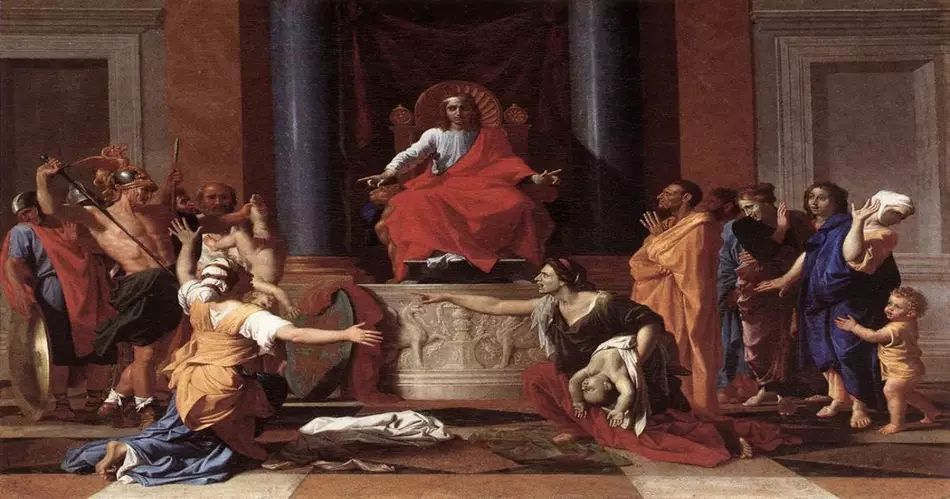
I trust all of you have heard of Solomon’s wise judgments! Two prostitutes lived in the same house and both gave birth to a son. One of the sons died while the mothers slept. Now, they fought for the living son, argued before Solomon that the dead child belonged to the other woman. It was difficult to know who the real mother was. So the king ordered, “Cut the living child in two, and give half to one woman and half to the other” (1 Kings 3:25)! The real mother loved the baby and gave up fighting in order to save its life while the other woman probably thought, “If I have not, you too will have not”. She agreed to cut the baby into halves (3:26)! Consequently, everybody was happy except for the stonehearted prostitute! “… all Israel …were in awe of him [Solomon], because they saw that the king had in him the wisdom of God for giving right judgment” (3:28)!
Do not dismiss this “wisdom of God” (3:28b) as common sense. God’s wisdom is “Love”. Paul says well, “If I give away everything I own, and if I hand my body over so that I may boast but do not have love, I gain nothing” (1 Corinthians 13:3). Indeed, without the motivation to “love God and love neighbour”, almsgiving and martyrdom do nobody any good! In the same vein, for those who have responded God’s call generously to follow Jesus Christ and yet fail to develop a desire to love God and to love neighbour, it is a great pity to see them end up bringing scandals to the Church!
Heavenly Father! Forgive us our trespasses as we forgive those who trespass against us. Amen!
Second Ordinary Sunday, Year B
Theme: To Bear Witness To Christ 為基督作見證
I am sure all of you are familiar with the story of the call of Samuel, the last of Judges of the Israelites after Joshua had brought the Chosen People into the Promised Land. Still, we need to clarify some terms. The location was the city of Siloh (1 Samuel 1:3) and Eli and his two sons were priests to handle sacrifical businesses (1:3, 9). In today’s passage, we read, “The lamp of God was not yet extinguished, and Samuel was sleeping in the temple of the Lord where the ark of God was” (3:3). We have “the lamp of God”, “the temple of the Lord” and “the ark of God” here. The lamp and the ark were objects put inside the Tabernacle which was built during Exodus. Therefore, this “temple of the Lord” must have been a relatively permanent structure to house the Tabernacle after the settlement in Canaan, and not the first Temple built by King Solomon in Jerusalem later (1 Kings 6:1).
After knowing the physical setup, let’s turn our attention to how God called Samuel. During the first three times, God called and Samuel heard his name called (1 Samuel 3:4, 6, 8). In the last call, God became more concrete, “The Lord came and stood there, calling out as before …” (3:10). From this narrative, we know that the Lord always takes the initiative to build up relationship with us. He would only invite and would never force us to accept. On the other hand, most people are like Samuel, not ready to receive God’s revelation until somebody, in this case Eli the priest, helps them set their sight on God! The story of Samuel reminds us Christians that we should not speak carelessly because “The Lord was with him, not permitting any word of his to go unfulfilled” (3:19), which means Samuel was a prophet and similarly we Christians partake in the prophetic ministry after our baptism. Therefore our words become unimaginably powerful. No wonder St. Paul teaches, “No foul language should come out of your mouths, but only such as is good for needed edification, that it may impart grace to those who hear” (Ephesians 4:29). Similarly, Peter teaches, “Do not return evil for evil, or insult for insult; but on the contrary, a blessing, because to this you were called, that you might inherit a blessing” (1 Peter 3:9). Never curse anybody or anything. Instead, we should love, pray and bless, even those who persecute us (Matthew 5:44).
Let us turn to the gospel passage of today and consider its context. John the Evangelist wants to inform the readers that Jesus Christ is the Word of God and is God Himself (John 1:1). Christ is the source of life, the light of the human race (1:4). John the Baptist “came for testimony, to testify to the light, so that all might believe through him. He was not the light, but came to testify to the light” (1:7-8). He bore witness to Jewish leaders (1:19-28), to people who came to hear him (1:29-34) and to his own disciples (1:35-51). If “the light of the human race” sounds too abstract to understand, the following titles ascribed to Jesus by various people would help readers grasp the meaning more easily: namely “the Lamb of God who takes away the sin of the world” by the Baptist (1:29, 36), “the Son of God” by the Baptist (1:34), “Rabbi” by two disciples (1:38), “the Messiah” by Andrew (1:41), “the King of Israel” by Nathanael (1:49) and “the Son of Man” by Jesus Himself (1:51). What can we learn from all these testimonies? Indeed, all of us are unique in our own way. Therefore, our relationships and understanding of the Lord will be unique. Some of us may feel deeply in need of His mercy and forgiveness of sins. Others aspire more of His eternal beatific bliss; yet others the right way to lead a holy life. Some feel secured as being the chosen ones, or being the People of God and lastly feel grateful to be in complete union with the humanity of the Son of God etc. Therefore, our testimonies to the light of human race will be unique as well! Christians! Ask yourselves what prevents you from testifying to the light!
Let us now narrow down to focus on the gospel passage today. John the Baptist sets us Christians an excellent exemplar that our mission is to draw people to Jesus Christ (1:37). He testifies to his two disciples that Jesus is the Lamb of God. This is the second time and to only two disciples. The Baptist accomplishes his mission by encouraging his own disciples to follow the true groom who must increase and he must decrease (3:29-30). Therefore, if we draw people to ourselves, sooner or later, we shall be overwhelmed by our own successes! No wonder many Catholics are reluctant to evangelize, to testfiy to the light.
The merciful Lord is always aware of the movements and needs of our souls. The two disciples only dared to follow behind, probably they were hesitant and not sure if Jesus would accept them because they were disciples of the Baptist. Jesus knew and took the initiative to invite them by giving them a stepping stone, an open end question, “What are you looking for?” (1:38b). The Baptist did not see himself as a Rabbi, but a voice in the wilderness. He would not explain systematically the Mosaic law to meet the expectations of some of his followers. Taking Jesus’ cue, these two disciples would be able to express their desire to learn the right way to lead their lives under the colonial Roman rule. Furthermore, they also wanted to show their readiness to devote and spend longer time to learn from this Rabbi whom the Baptist had recommended. Thus they say, “Rabbi, where are you staying?” (1:38c) Why are the two disciples interested in where Jesus stayed/lived? The Evangelist gives us a clue, namely that “it was about four in the afternoon” (1:39c) which means there were only two hours left to end the day and there would not be enough time for the disciples to deal with all their existential questions! The merciful Lord is able to fulfil all our needs and to empower us to transcend our limitations. He is always open and has prepared a lot of surprises for us. “Come, and you will see” (1:39a). In the end, the disciples are able to come up with different understanding of “the light of the human race”. Peter’s/Mark’s Christ is an action-hero. Matthew’s Christ is the perfect Rabbi greater than Moses. Luke’s Christ is a merciful Lord for the socially marginalized and is always ready to forgive. John is able to extract the essence of God which is love. Paul is able to find a subtitute for the Mosaic Law, namely faith in Christ Jesus and James concretizes Jesus’ teachings to make them relevant even today etc. Together the disciples have avoided painting a one-dimensional Jesus. Together, they project a multifaceted Christ! Catholics! It is simply impossible to exhaust all the narratives of Jesus Christ. What prevents you from testifying to the light?
Last week we learnt that all of us are Stars of Bethlehem to attract people to the incarnated Son of God. Today, we see how Eli help Samuel; John the Baptist his disciples and the apostles Christians of the future generations etc. to get connected with God, with Jesus Christ. Beloved brethren! If you find it difficult to identify God’s will, or if you are diffident in testifying to Jesus Christ in front of people, it is time to review our relationship with Him. But rest assured that at all times and in all situations, God always takes the initi target=rframe>ative to lend us a hand. Lift up your arms to call out His name. He shall be there to raise you up. Amen!
God bless!
Fourth Advent Sunday, Year B
Theme: Your Will Be Done 爾旨承行
If we have spent sufficient time studying the Bible, we will arrive at a conclusion without a shade of doubt, namely that our Father in heaven is infinitely beyond our knowing and that we shall rest assured of His providence. This is the last Advent Sunday which this year falls on Christmas Eve! Of course, this happens regularly once every five to six years and there seems to be anything but extraordinary. Not quite! The world has been chaotic and war-torn enough these months. Many Christians who were born after the two world wars in the previous century are in earnest anticipation to witness what peace our heavenly Father has in store for us. We know that we have a part to play but world peace is really beyond our reach. It is too big for us to manage but we are confident that when instead of throwing our hands in the air, we elevate them to our heavenly Father in prayers, He will hear and answer us.
The first reading today is the famous “Nathan Oracle”. When the Empire was secured and the twelve tribes of Israel united, King David had less worries on the political and military fronts. He turned his attention to the consolidation on the religious front --- build a Temple for Yahweh in Jerusalem. It had never been easy to eradicate idolatory when your people were living among pagans and a Temple would draw the attention of the people to Yahweh. The choice of location was prudent because Jerusalem was built on top of Mount Sion, a militarily secure site. When King David told Nathan his intention, there was nothing Nathan could find to object about. So Nathan says, “Whatever is in your heart, go and do, for the Lord is with you” (2 Samuel 7:3). After all, Samuel told King Saul, David’s predecessor, that David was “a man after God’s own heart” (1 Samuel 13:14; Acts 13:22). Indeed, David had been a man after God’s own heart for a time long enough for the unification of the twelve tribes of Israel into a kingdom. But history proves that authority corrupts even the man after God’s heart. That’s another story to meditate. Let’s focus on today’s texts.
It turned out that God’s heart is far bigger than humanity could fathom. God has a grander vision. Our heavenly Father knows David’s heart through and through. David’s future was clearly visible in His sight. So first of all, God made it plain to David through Nathan that He does not dwell in a house (2 Samuel 7:6-7). Before David came to power, God had never complained about the absence of a Temple to worship Him. Perhaps Isaiah’s explanation is better and clearer, “Thus says the Lord: The heavens are my throne, the earth, my footstool. What house can you build for me? Where is the place of my rest? My hand made all these things when all of them came to be --- oracle of the Lord” (Isaiah 66:1-2a). Finally, it is through Jesus Christ, His only begotten Son that true worship is revealed. When men build temples to worship deities, men actually attempt to take control over the whereabouts of their deities. Such deities are men-made idols because they can be manipulated by men and thus not worth worshipping. No! Yahweh would not play into men’s hands. Jesus told the Samaritan woman, “God is Spirit, and those who worship him must worship in Spirit and truth” (John 4:24). In other words, men are able to worship even without a temple because their bodies are temples of the Holy Spirit (1 Corinthians 6:19). What does “worship in Spirit and truth” amount to? Nowadays, we can’t afford the opulence of King Solomon, who and the entire community of Israel, gathered for the dedication of the First Temple before the Ark of Covenant, sacrificed sheep and oxen too many to number or count (1 Kings 8:5). No. Our heavenly Father does not want this because it is only a show-off of personal power and wealth before the people! Don’t be silly to play Pharaoh before the Almighty living God who prefers something else!
Let’s return to Nathan’s Oracle. One may wonder why God needed to be so long-winded to talk about David’s past, “I took you from the pasture, from following the flock, to become ruler over my people Israel. I was with you wherever you went, and I cut down all your enemies before you” (2 Samuel 7:8b-9a). Why? It was the same love Yahweh always has for potential sinners, such as Cain (Genesis 4:6-7). God pledged a good future which David could attain when he continued to be humble like the shepherd boy of the good old days, “And I will make your name like that of the greatest on earth. I will assign a place for my people Israel and I will plant them in it to dwell there; they will never be disturbed, nor shall the wicked ever again oppress them, as they did at the beginning, and from the day when I appointed judges over my people. I will give you rest from all your enemies” (2 Samuel 7:9b-10). King David was important because his choices would directly affect the fate not only of himself but also of God’s people Israel. Regrettably, King David fell from grace and so did his son King Solomon! Without giving up, our heavenly Father kept raising reformers such as King Josiah and Ezra and finally played His trump card, a humble virgin with an immaculate heart whom Satan would regret to have overlooked.
It is interesting to note that God did not visit the Blessed Virgin Mary in person like He did with the Patriarchs, Moses, David and Solomon etc., but sent an angel to announce His plan instead, like the anonymous mother of Samson (Judges 13:2). No! It is too conspicuous and Satan would know lest it would attack her like it did with other big and famous figures in the Old Testament. Thus, instead of praying, “Your will be done” (Matthew 6:10b), the Blessed Virgin Mary would only say, “May it be done to me according to your word” (Luke 1:38b)!
Alas! Many a Christian prays “Your will be done” when he actually wants “My will be done”. Too many people in power have hijacked Christianity by committing atrocities in God’s name or advocating bigotry with God’s words. Take a look at the Blessed Virgin Mary. She did not find comfort or convenience in the angel’s annunciation. Instead, “But she was greatly troubled at what was said” (1:29a)! Therefore, don’t expect to feel and find consolation or relief in God’s will! Most of the time, because of our sinful nature, the opposite might be a good indication of God’s will, namely you’ll feel inconvenient, troublesome, futile, exhausting, impossible and hopeless etc. Who wants to be poor or sick? Who wants to be ignored, rejected or even scolded? Most of the time, we would be grateful for such sufferings afterwards. Patience pays.
Beloved brethren! Do you have the stomach to will God’s will be done on you?
God bless!
Nineteenth Ordinary Sunday, Year A
Theme: Who Else If Not Me? 捨我其誰?
Each of us is unique and thus our paths to salvation/justification/sanctification, whichever way you like to label it, are unique. Some attain sanctification through heroic martyrdom “Whoever loses his life for my sake will find it” (Matthew 10:39b), while others lead a contemplative and uneventful life which the Lord also approves (Luke 10:42). However, there are many Martha-like people who would be proud of their own diligence and would complain about the lack of commitment of others. Similarly, our progresses on the sanctification paths would also be different. While some “forgetting what lies behind but strain[ing] forward to what lies ahead” (Philippians 3:13b), others tarry around to explore different possibilities. However, there are many people like those self-righteous Pharisees who would be proud of their own piety and would despise the “sinners” (Luke 18:11-12). That is why the Lord advises us to suspend our judgment on others, “Stop judging, that you may not be judged” (Matthew 7:1). Alas! How difficult it is not to judge!
The other day I had the opportunity to share with some parishioners my personal objections to the practice of environmentally friendly funerals in the form of scattering the ashes in the sea or designated memorial gardens. I was amazed that many of the parishioners do not know the Church prohibits such practices and the reasons behind. An instruction published by the Congregation for the Doctrine of the Faith in August 2016 reads as follow. “In order that every appearance of pantheism, naturalism or nihilism be avoided, it is not permitted to scatter the ashes of the faithful departed in the air, on land, at sea or in some other way, nor may they be preserved in mementos, pieces of jewellery or other objects. These courses of action cannot be legitimised by an appeal to the sanitary, social or economic motives … When the deceased notoriously has requested cremation and the scattering of their ashes for reasons contrary to the Christian faith, a Christian funeral must be denied to that person …” (Ad resurgendumm cum Christo, #7-8).
So what Christian faith is offended so much so that even a Catholic would be denied the dignity of a Christian funeral? The Church always prefers burial because “burial is above all the most fitting way to express faith and hope in the resurrection of the body”. She insists on defending the continuous identity of the deceased. The document continues, “to show the great dignity of the human body as an integral part of the human person whose body forms part of their identity” and to fight against “erroneous ideas about death, such as considering death as the definitive annihilation of the person, or the moment of fusion with Mother Nature or the universe, or as a stage in the cycle of regeneration, or as the definitive liberation from the prison of the body”. (ARC #3)
I quote this in details because I believe many parishioners buy the idea of environmentally friendly funerals promoted by the government and are ignorant of the Church’s position. They have been misled by the candy coating of “environmental friendliness” and do not know the economic incentive behind such a policy. Forget about economy and theology, I think the government is silly in promoting such kind of funerals when at this crucial moment building up a sense of belonging to this city is of top priority! When ashes are scattered in the sea, how would the descendants of the deceased gather somewhere in this city together to remember their ancestors?
When even believers are misled by propagandas, what about those who do not have Christ’s truth to defend themselves? There are simply too many atheists, popular entertainers, multi-national corporations and respectable scientists etc. whose aim is to publicize their agendas and to fatten their pockets! Scientists put up an objective front and emphasize experimental evidences to criticize religions as irrational. But nowadays, researches which are not lucrative will not be sponsored by entrepreneurs. How objective such researches could be. On the other hand, corporations invest huge budgets in commercials to persuade people to spend money on their products. They are also eager to sponsor popular stars to become idols in order to set up a farm of faithful followers to milk them of money. How hard it is for modern Christians to stick to their Christ who does not promise them any wealth nor health!
When I pass judgment on my fellow parishioners and non-believers, I have to remind myself that “pious Christians” would easily fall prey to a grandiose self-image: “I’m the only truly pious Christian before God” and with this, those “pious Christians” bring themselves into troubles, putting their faith in tests! The Bible readings today illustrate it well. In the first reading, we read of God appearing to Elijah on Mount Horeb. Let’ review the background of this story.
Elijah was over-confident. He thought himself the only surviving prophet in Israel under Queen Jezebel. “I have been most zealous for the Lord … I alone remain …” (1 Kings 18:22; 19:10, 14) though previously Obadiah informed him that he had kept safe one hundred prophets of the Lord (18:13). Three years before, he proclaimed to King Ahab “During these years there shall be no dew or rain except at my word” (17:1); and left for Zarephath and stayed there for three years. Then at the Lord’s command, he returned to Israel to challenge the false prophets of Baal to pray for the end of drought which he had brought about. He won, thus proving that Yahweh was the true God. Then he incited the Israelites and together they butchered more than 450 false prophets of Baal. This angered Queen Jezebel who swore to kill Elijah. “Elijah was afraid and fled for his life …” (19:3). His over-zeal landed him on troubles and he had to flee for his life! In this context, God appeared to Elijah in today’s reading, but in the most unexpected manner. God was not in the glamour of the violent and strong wind that rent mountains, not in earthquake nor in fire but in “a light silent sound” (19:11-12). God is not only powerful (wind, earthquake & fire) but is also merciful (a light silent sound). Yahweh shows His mercy when the evil Ahab repented of the death of Naboth. God spares Ahab and stayed the punishment after his death (21:29). It seemed that Elijah had not understood the mercy of God. Later, King Ahaziah, son of Ahab, sent fifty men to arrest Elijah. To prove that he was a man of God, Elijah called fire down from heaven to consume the company of fifty men and their captain (2 Kings 1:10). Elijah did it a second time (1:12)!
Probably it was a personality defect that Peter made similar mistakes in the gospel reading today. In fact, Peter didn’t have to go all the way out to meet Jesus on the waves. Jesus was walking towards them and they could simply wait! Perhaps he felt a need to prove himself worthy of being the leader of the Twelve! On his way walking on the waves towards Jesus, Peter became frightened; and began to sink (Matthew 14:30). Jesus extended His hand to save him. Another similar event happened later when after Jesus’ arrest Peter followed behind up to the courtyard of the High Priest (26:58) and ended up denying Jesus three times. Again, Peter didn’t have to put himself into such a treacherous situation but he literally walked right into the lion’s lair. I wonder what prompted him to risk his life and be humiliated among all the followers. Was Peter loyal or imprudent or in need of proving his worth? It doesn’t matter. The most crucial thing is the mercy of God. “The Lord turned and looked at Peter; and Peter remembered ..He went out and began to weep bitterly” (Luke 22:61-62). Peter had fallen many times and with his frailty, “once you have turned back, you must strengthen your brother” (22:32).
Beloved brethren! Let us embrace our frailties as well as others’. Pray that we don’t desire to judge but to beg for the mercy of the Lord. Amen!
Seventeenth Ordinary Sunday, Year A
Theme: A Listening Heart 一顆慧心
There is always a tension between the old and the new, between the juniors and the seniors. People cherishing traditional and conservative views find new things disruptive while people harbouring liberal and progressive views opine that traditionalists are pulling their legs. It is difficult for traditionalists to accept innovations because the old ways are effective. Why bother changing them? Why rock the boat? The progressive thinkers set their eyes on the future as well as their neighbourhood and opine that they are being proactive. We can’t afford to wait lest we’ll be overtaken and be overrun! However, nobody is able to see the future and their assessments of the neighbourhood are different. The future as well as the neighbourhood mean different things to different people. Of course, we cannot stay stagnant forever because “Time and tides wait for no one”. In order to accommodate new ideas, we need to keep our minds open and always fresh. No wonder Jesus says, “People do not put new wine into old wineskins. Otherwise the skins burst, the wine spills out, and the skins are ruined. Rather, they pour new wine into fresh wineskins, and both are preserved” (Matthew 9:17).
Some people opine that religion is an opium for the commoners. People in authority invented some deities for the commoners to worship, to relieve themselves of harsh realities in their daily lives and in the exploitations from social institutions. When you are ill-treated, exploited and cannot find justice on earth, endure to the end [aka in the next world] and you’ll find salvation in the gods you believe, “Whoever endures to the end will be saved” (10:22, 24:13).
In reality, nobody is able to understand all the articles of faith of any global religions. However, men always enjoy playing God and make consequential decisions. Take Christianity as an example, some people think that the Demiurge described in the Old Testament is too cruel and bloody. He kills (Exodus 12:29, 14:28) and orders the Israelites to commit genocides (1 Samuel 15:3). This Demiurge is entirely different from the merciful Father preached by Jesus Christ (Luke 6:36). Therefore, the Old Testament should be excluded from the Holy Bible. Similarly five centuries ago, in order to condemn the corruption arising from the sale of Certificate of Indulgence, Martin Luther removed books from the Old Testament which have Greek renditions only and do not have Hebrew texts in order to uproot the theological basis of selling Indulgence Certificates. Consequently, the Protestant Bible has seven books less than the Catholic Bible. Now fast forward to the early twentieth century, the Hebrew version of one of the deleted books was unearthed but it can no longer be restored in the Protestant Bible! Religion is such a colourful phenomenon and a manifestation of human nature! Describing religion as an opium of the people is at best an oversimplification because of ignorance or perhaps more accurately a political smear.
Adaptation is essential for survival and growth. Though Christianity emerges from Judaism, it is radically different and flourishes. Both of them accept the Ten Commandments as their guideline for living but they practise them in different manners. For example, Jews keep the Sabbath on the seventh day of the week because the Torah says that the Lord rested on the seventh day after six days of Creation (Exodus 20:11). On the other hand, Christians rest and make holy the first day of the week because Jesus Christ resurrected on the first Easter Sunday to liberate us from the bondage of sin (Deuteronomy 5:15)!
Even within Christianity, different denominations disagree to suit their agendas. For example, Protestants take an iconoclastic stance and split the First Commandment into two, the second being “You shall not make for yourself an idol or a likeness of anything in the heavens above or on the earth below or in the waters beneath the earth” (Exodus 20:4). In order to do away with abusive priests, they insist on the memorial nature of the Holy Communion. Jesus is not present in the bread and therefore they don’t need a class of priests to consecrate the bread! They quote, “Do this in memory of me” (Luke 22:19c) to argue. Incidentally, Catholics insist that Jesus is God and what He says is true. Catholics make use of the same quotation, “This is my body, which will be given for you” (22:19b) to argue! Jesus is present in the Sacrament and therefore, we need a class of priests to consecrate the bread! This choice of stance is clearly done after efforts of deliberation and no longer a consequence of ignorance! It is a matter of political agendas. The question becomes whether those decisions follow God’s will!
In the first reading today, we admire the wise choice of King Solomon. He asks for a listening heart to judge Israelites and to distinguish between good and evil (1 Kings 3:9). Biblical scholars are unable to come up with a definite age at which Solomon became king. His age ranges from twelve to thirty! Don’t be surprised by the number twelve because Jehoash was seven years old when his reign began (2 Kings 12:1)! Thus Solomon was sincere when he says, “But I am a mere youth, not knowing at all how to act” (1 Kings 3:7b). His wisdom was manifested in the story immediately follows: that Solomon ordered to cut a contested baby into halves and give to the two prostitutes claiming to be the mother (3:16-28). Three thousand proverbs and one thousand and five songs were ascribed to King Solomon (5:12). He spent seven years to build the first Temple dedicated to Yahweh and his fame attracted the Queen of Sheba to visit him and test him with subtle questions (10:1)! Thus Jesus says, “I give praise to you, Father, Lord of heaven and earth, for although you have hidden these things from the wise and the learned you have revealed them to the childlike” (Matthew 11:25)
However, his riches and prosperity sowed the seeds of his downfall in his later years. In order to maintained peace with nations and tribes around, King Solomon practised political marriages. “He had as wives seven hundred princesses and three hundred concubines” (1 Kings 11:3). With stability and peace, he managed to make the legendary six hundred and sixty-six gold talents a year (10:14). However, those wives turned his heart to follow other gods … (11:4). After his death, the kingdom was divided into two! What can we learn from the biography of King Solomon? Perhaps we can find the answer in one of his proverbs. He says, “The beginning of wisdom is fear of the Lord” (Proverbs 9:10a). He lost his fear of the Lord when he allowed his concubines and wives of political marriages to worship their idols in the Temple! It is a pity to see the legendary king lose his listening heart of youth when he set his eyes on power, riches and perhaps lust which make him age quickly.
Brethren, the merciful Lord tells us to let go of worldly desires in exchange for eternal life in the parables of Hidden Treasure and Precious Pearl. He will not force us to give up all we have to buy the treasure or the pearl. We are free to choose. Let’s pray to the Holy Spirit to inspire in us the Fear of the Lord so that with a childlike and listening heart, we will be able to discern God’s will and make the right choice. Amen.
God bless!